
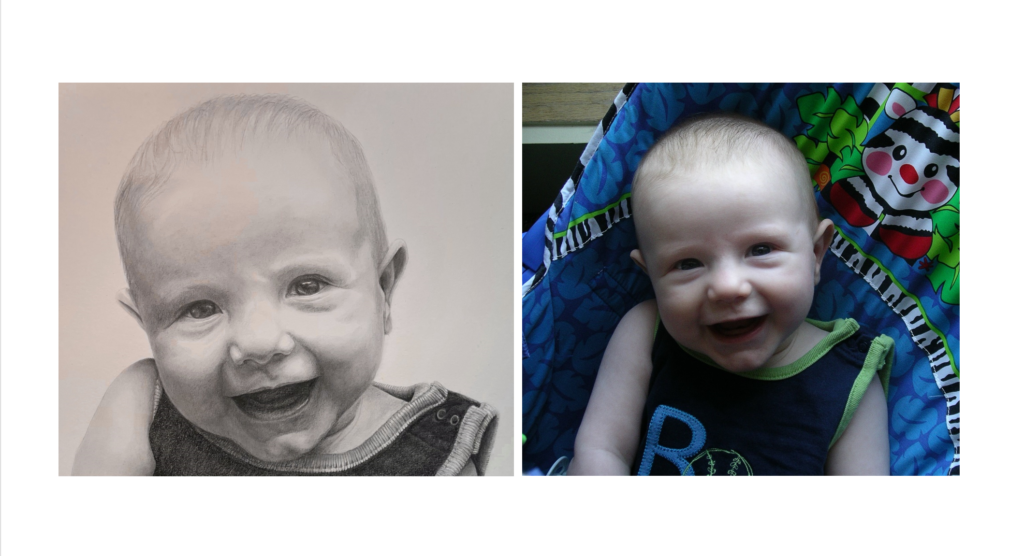

When commissioning a portrait, it is important to know that the quality of the reference photo will determine the quality of the portrait. Clear photos taken in natural light are best.
Here are some important factors to consider when choosing a reference photo:
- Make sure that you love the expression on your subject. This may seem obvious, but it’s those photos that keep drawing you back because something in the expression speaks to you that are best to look at first.
- Consider the light source – a strong light source is the most important factor in any photo. If the photo was taken outside, you already have a strong light source (the sun). Even on a cloudy day, the sun will provide all the light needed for a good reference photo. Photos taken with the sunlight coming from the photographer’s right or left provide wonderfully clear contrasts in light and dark.
- Consider positioning – if your subject is positioned so the primary light source is directly behind them, their face will be in total shadow. Even a beautiful expression can’t rescue the portrait from appearing flattened or dull. Also, if the light source is positioned directly behind the photographer, subjects may squint and the photographer’s own shadow may fall on the subject.
The following photos show how much difference the direction of light can make:
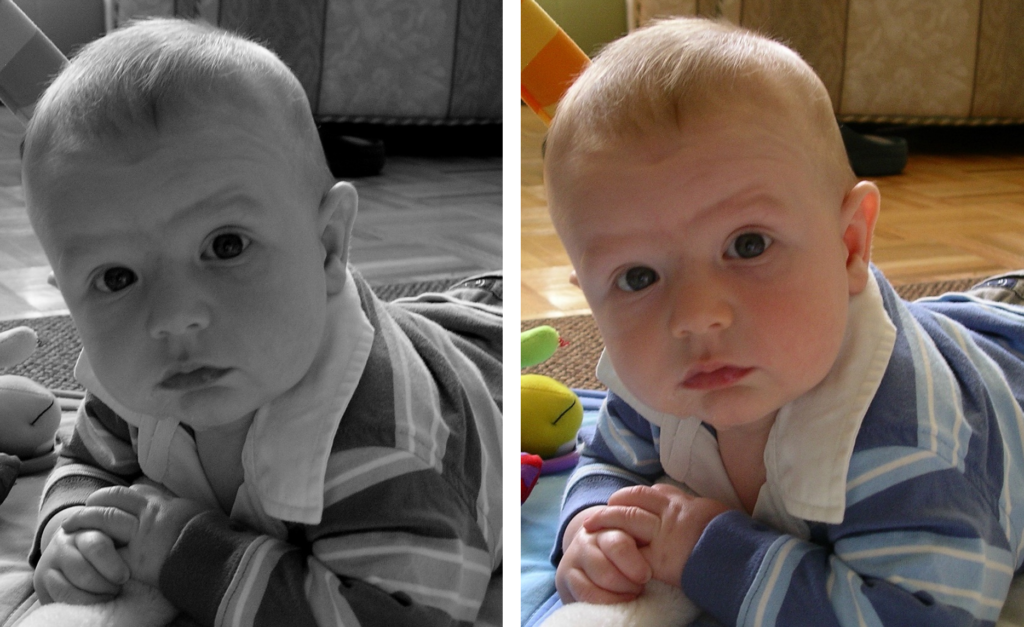
almost entirely in shadow (this is even more obvious when the
photo is changed to black and white). Though his expression and
pose are beautiful, some of the details and dimensionality in his
face are lost as a result of the lighting.
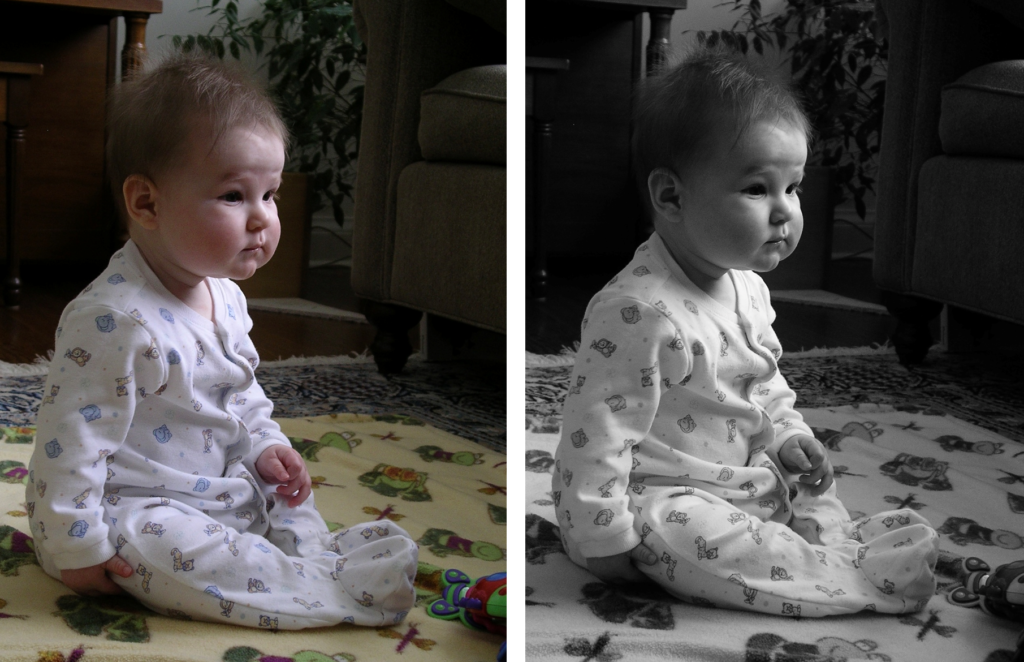
dramatic scene. You can see more of the details in the child’s face,
and the dimensionality of her face and body are more defined.
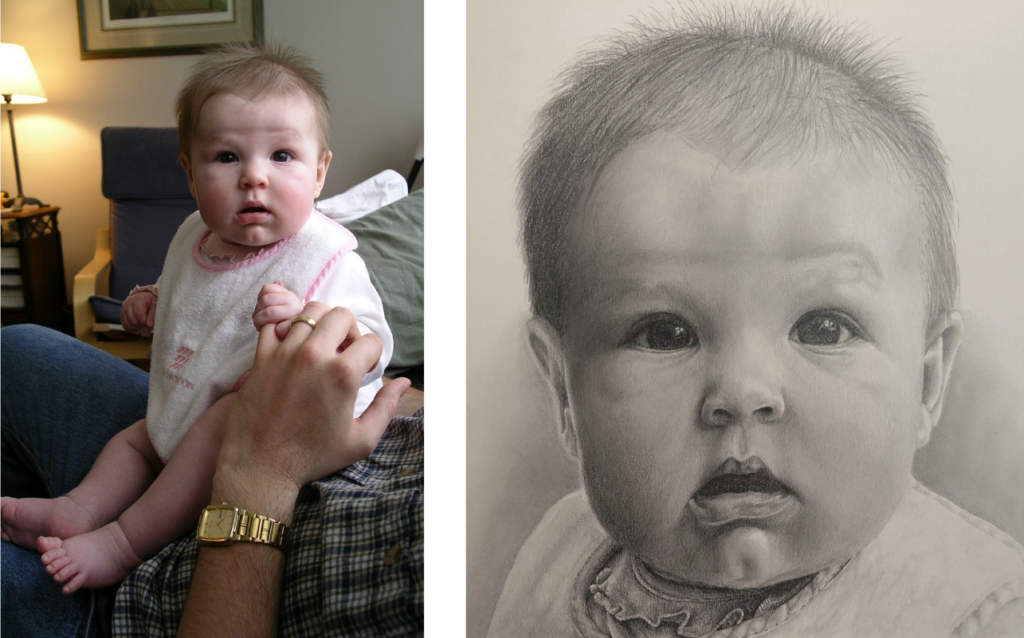
- Don’t worry at all about backgrounds – facial expression and lighting are the only things that matter. In fact, if you go through older photos, you may have a well lit, clear photo of the sweetest expression on your subject’s face, with a horribly cluttered background. It might be a photo that you wouldn’t consider
enlarging and hanging on the wall because of the cluttered background, but the expression and lighting might make it the most perfect candidate for a reference photo. If the subject’s face is well lit and the photo is clear, the photo can be cropped and the background ignored to create a beautiful portrait. I drew one of my favourite portraits using this type of reference photo.
- Make sure there isn’t anything in front of the subject’s face, and that objects outside of the portrait don’t cast strange shadows on the subject’s face.
- If choosing an older photo, where possible, it is best to scan the negative (rather than the photo) into digital format. This enables the image to be zoomed and cropped to create the best quality reference photo. When the negative is not available, older photos should be scanned at the highest quality setting possible.